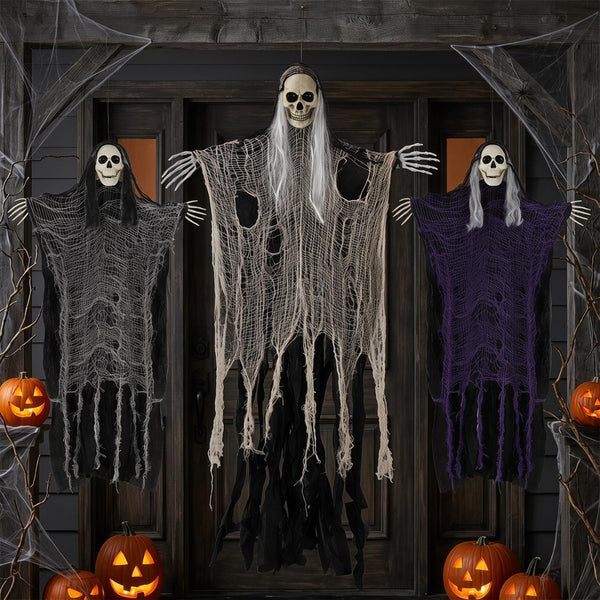
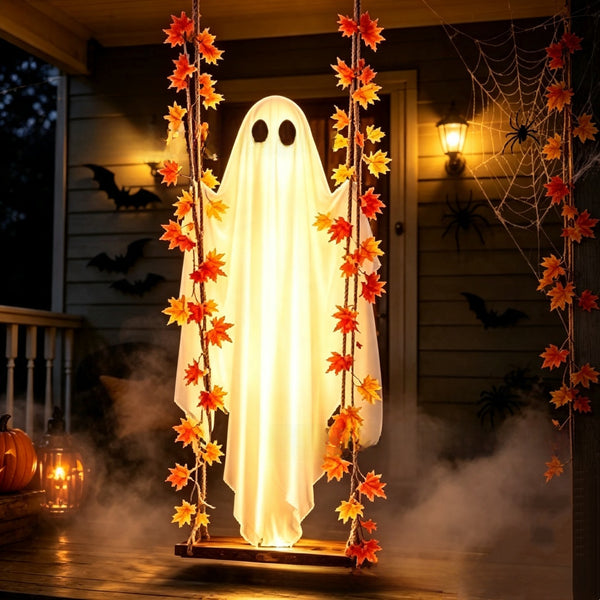
The best Halloween lights depend on where the decoration needs to work. Choose string lights when you want a continuous line of glow across a mantel, shelf, doorway, or covered display. Choose a touch night light for one small indoor focal point. Choose solar Halloween lights for a path, lawn, or garden area where sunlight reaches the panel and running a cable would be awkward.
That direct answer is more useful than shopping by character alone. Start with placement, then choose a power source, coverage, and control style that suit the space. A small bedroom accent does not need a six-metre strand, while a garden route is easier to read when several lights create a visible sequence. This Halloween lights guide compares the three formats so you can build a display that is attractive, practical, and easy to manage.
Which type of Halloween light fits each space?
Think of each format as a different decorating tool rather than as interchangeable versions of the same product.
- Halloween string lights are best for outlining. They follow edges, wrap around rails, and create visual rhythm across a longer surface.
- A Halloween night light is best for a concentrated accent. It suits a bedside table, entry console, desk, or shelf where one recognizable object can carry the theme.
- Solar Halloween lights are best for outdoor wayfinding and spaced decoration. Individual stakes can lead the eye through a garden, along a path, or around a planted border.
If you are decorating one room, pick the format that solves the largest placement problem first. If you are decorating several zones, use one format as the main layer and one as an accent. This produces a more coherent result than buying many unrelated light shapes.
How should you compare power sources?
Power is the practical choice that determines where a light can go and how often you will interact with it. The live Halloween Pumpkin LED String Lights listing includes battery and USB options, with strand choices labelled 1.5 metres with 10 lights, 3 metres with 20 lights, and 6 metres with 40 lights. Some variants are steady, while selected battery versions include steady plus flash. Choose the exact variant from the product page rather than assuming every length has every mode.
A USB version makes sense near an appropriate indoor power source or compatible power bank. A battery version gives you more freedom to place the strand away from a wall socket, but you still need an accessible, tidy place for the battery pack. Do not hide a power pack where it is difficult to reach or where its use conflicts with the product instructions.
The touch night light is a self-contained accent rather than a strand. Its listing describes silicone touch operation, warm light, and two pumpkin-face options. It is the simplest choice when your priority is a small decorative object that can be adjusted directly at the bedside or on a tabletop.
The solar garden-light listing describes automatic solar operation and an IP65 rating. Solar placement depends on exposure: the panel needs a location where it can receive useful daylight. Nearby trees, eaves, walls, or other decorations can shade a panel even when the stake itself looks well positioned.
How do string lights, night lights, and solar stakes compare?
| Format | Best fit | Main decision | Watch for |
|---|---|---|---|
| String lights | Mantels, shelves, door frames, covered displays | Length, light count, battery or USB, steady or flash | Measure the route and leave access to the power connection |
| Touch night light | Bedside table, desk, entry console, small shelf | Face style and exact location | Keep enough clear surface around the light for easy use |
| Solar garden stakes | Paths, lawns, borders, planted areas | Character style, spacing, and solar-panel exposure | Shadows, soft soil, irrigation, and seasonal weather |
This comparison also helps with budget discipline. Instead of comparing only unit prices, compare the area each product is expected to cover. One tabletop light solves a small focal point; a strand covers a line; a set of stakes creates a route. The useful question is not “Which one is cheapest?” but “Which one finishes the intended zone without extra purchases?”
What practical steps create a cleaner Halloween lighting plan?
- Map the viewing path. Stand where guests first see the space. Mark one primary focal area and one or two supporting areas.
- Measure every line. Measure the shelf, frame, or railing before choosing a string-light length. Include gentle curves, but do not stretch a strand tight.
- Check power before styling. Confirm the socket, USB source, battery-pack location, or solar-panel exposure before attaching decorations.
- Test the exact variant. Turn the light on and confirm its control mode before final placement. It is easier to adjust a layout on a table than after it is installed.
- Build in layers. Start with the main lighting line, then add one focal object or a short outdoor sequence. Stop when the route is clear; more lights are not automatically more effective.
- Review in darkness and daylight. At night, check glare and visual balance. In daylight, make sure wires, packs, and panels are not creating clutter.
Who is each option best for?
Choose Halloween string lights if you enjoy arranging a display and want flexible coverage. They are especially suitable for renters or seasonal decorators who prefer a removable layer rather than a large permanent object. The multiple live length, light-count, shape, and power combinations make careful variant selection important.
Choose the touch night light if you want a compact seasonal accent with minimal installation. It is a strong fit for a small room, dorm-style space, nightstand, or work area where a long strand would feel visually busy. It is also easier to store than a multi-piece outdoor setup.
Choose outdoor Halloween lights in a solar stake format if the display should guide attention along the ground. The live listing includes several character designs, including pumpkin, ghost, owl, mummy, and skull-themed choices. Inspect the product photos and variant name closely because the visual identity changes between options.
What limitations should you consider?
Decorative lights are not interchangeable across all environments. Do not assume an indoor string light or tabletop light is suitable for exposed outdoor use. Follow the exact product instructions and keep connections, packs, and power sources within their intended conditions. For the solar product, an IP rating does not remove the need for sensible placement and installation.
Brightness and perceived colour can also vary with the room, surrounding surfaces, camera exposure, and nearby lighting. Product photos are useful for identifying shape and style, but your dark porch and a bright bedroom will not look identical. Treat decorative lighting as ambience and route definition, not as a substitute for primary task or safety lighting.
Finally, seasonal decorations still need storage. Avoid crushing shaped light covers or winding wire around a very small object. Clean and dry outdoor pieces before packing them, keep related parts together, and label the power format so next year's setup starts smoothly.
What common mistakes make a display harder to use?
- Buying a strand before measuring the actual route.
- Choosing a power format without deciding where the cable, USB source, or battery pack will sit.
- Placing a solar panel in shade because the decorative stake itself is in an open-looking area.
- Mixing too many character styles, colours, and flashing modes in one small zone.
- Blocking a touch light with other objects, making its main control less convenient.
- Assuming every variant has the same length, mode, face, or included configuration.
Shop Related Picks at Arbasa
- Halloween Pumpkin LED String Lights — a flexible outlining option with multiple labelled lengths, light counts, character shapes, and battery or USB configurations.
- Halloween Pumpkin Silicone Touch Night Light — a compact warm-light accent with touch operation and two listed pumpkin-face choices.
- Halloween Solar LED Garden Lights — outdoor stakes with automatic solar operation and multiple listed Halloween character designs.
Review the current product page before checkout for the selected variant, exact price, photos, dimensions, power details, and availability.
Frequently asked questions
Are string lights or solar stakes better for a front yard?
Solar stakes are usually the more direct choice for a path, lawn edge, or planted border, provided the panel receives suitable daylight. String lights are better for a covered porch feature, railing, or doorway where you need a continuous line. A front yard can use both if each has a distinct job.
How long should Halloween string lights be?
Measure the complete decorating route and allow enough ease for curves and attachment points. The live Arbasa listing labels 1.5-metre, 3-metre, and 6-metre configurations, paired with different light counts. Select from the product page based on the measured route rather than the room's general size.
Can a Halloween night light replace normal room lighting?
No. It is a compact decorative accent intended to add a warm themed glow. Use proper room or task lighting whenever you need reliable visibility.
What should I check before ordering solar Halloween lights?
Check the exact character variant, panel placement, ground conditions, listed dimensions, and product instructions. Also confirm that the intended area gets useful daylight and that the stake location will not interfere with walking, mowing, or watering.
A successful Halloween display begins with a simple match: linear glow for edges, a touch light for a small focal point, and solar stakes for an outdoor route. Choose the job first, verify the exact variant second, and decorate only after power and placement are settled.